Media Offline in DaVinci Resolve: How to Fix It and Other Common Errors

Edited by
Ben Jacklin
4,757

Media offline error – what it means

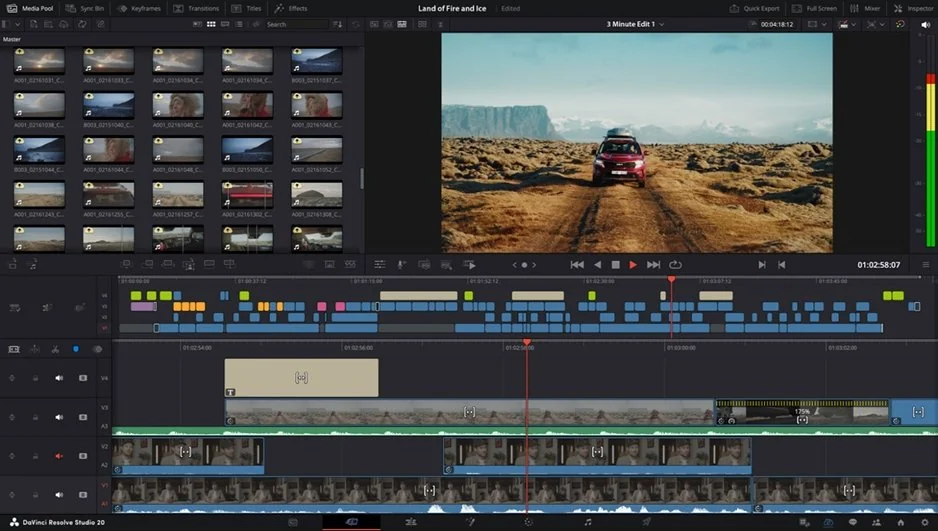
If you've ever opened a DaVinci Resolve project only to find your timeline filled with red frames stamped Media Offline, you're not alone. The media offline DaVinci Resolve error is by far the most common issue editors encounter, and it tends to appear at the worst possible moments.

So, what does media offline mean in DaVinci Resolve? In short, it means the software can no longer locate the source files that your timeline clips are linked to. DaVinci Resolve doesn't embed your footage inside the project file – it references the original media on your drive. When those files move, get renamed, are stored on a disconnected external drive, or get deleted, Resolve loses the link and displays the Media Offline message in its place.

Why does DaVinci Resolve say Media Offline? The most common causes include:

  • Moving or renaming source files after they were imported into the project.
  • Disconnecting an external hard drive that holds your footage.
  • Transferring a project to a different computer without bringing the media along.
  • File system permission changes that prevent Resolve from reading the files.
  • Codec or format issues – for example, DaVinci Resolve media offline MP4 errors often occur when the MP4 uses a codec (like certain H.264 profiles) that Resolve can't decode without additional drivers.

A subtler variant: DaVinci Resolve says Media Offline but audio plays. This specific situation – where you hear sound but see only a red offline frame – usually points to a codec problem rather than a missing file. The audio stream is readable, but the video codec isn't supported or is corrupted. Similarly, DaVinci Resolve PNG media offline issues often arise when PNG sequences have been moved or their folder path has changed.

Sometimes editors encounter what feels like a false positive: DaVinci Resolve shows media offline but it's not – the files are exactly where they've always been. In this case, the culprit is usually a database path mismatch, a drive letter change on Windows, or a macOS volume that remounted under a slightly different path.

Step-by-step solution for the media offline error

Here's how to fix media offline in DaVinci Resolve, covering all the main scenarios:

1. Relink media manually

This is the most direct fix. In the Media Pool, right-click on any offline clip (shown with a red warning icon) and select Relink Selected Clips. Navigate to the folder where your footage lives and confirm. Resolve is smart enough to relink all clips in that folder at once if they share the same directory.

If you have clips scattered across multiple folders, repeat this process for each location. Alternatively, right-click the parent bin and choose Relink Clips for Selected Bins to handle everything in one pass.

2. Use Find people and group clips for large projects

For larger projects, go to Media Pool, Find and Relink or use the File, Relink Media option from the menu bar. Point Resolve to the root folder of your media, and it will scan recursively to reconnect everything it can find.

3. Fix drive letter or mount point Issues (Windows & Mac)

On Windows, if you moved footage to a different drive and the drive letter changed (e.g., from E:\ to F:), Resolve won't find the files automatically. Relink manually as above, or consistently use the same drive letter. On Mac, check that your external volume mounts with the same name as before – a renamed volume will break all existing links.

4. Install missing codecs

For DaVinci Resolve MP4 media offline or other format-specific errors:

  • Windows: Install the free DaVinci Resolve Speed Editor codec pack, or install LAV Filters for broader H.264/H.265 support.
  • Mac: Many codec issues resolve after installing Apple Compressor or the Pro Video Formats package from Apple.
  • Consider transcoding problematic files to a more edit-friendly format like DNxHD or ProRes using DaVinci Resolve's own media management or a tool like Handbrake.

5. Check permissions

Right-click your media folder and verify that your user account has full read access. On macOS, also check System Settings, Privacy & Security, Files and Folders to confirm Resolve has permission to access the relevant locations.

6. Refresh or restart

Occasionally, DaVinci Resolve says Media Offline due to a temporary cache or database glitch. Close the project, quit Resolve entirely, reopen, and check again. If the DaVinci Resolve media offline when importing error appears immediately on import, try copying the files to your local drive first rather than importing directly from a network share or slow USB device.

Other common DaVinci Resolve errors

Beyond the media offline issue, several other errors trip up editors regularly:

DaVinci Resolve timeline frame rate greyed out

This happens when a timeline already contains clips – Resolve locks the frame rate to prevent sync issues. The fix: delete all clips from the timeline first, change the frame rate in Timeline Settings, then re-add your footage. Better yet, set your timeline frame rate before adding any clips.

DaVinci Resolve project disappeared

If a project seems to have vanished, don't panic. Open the Project Manager and check all available databases. Projects are sometimes saved to a different database than expected, especially after a Resolve update or if multiple databases are configured. You can also find local project database files at %AppData%\Blackmagic Design\DaVinci Resolve\Support\Resolve Disk Database (Windows) or ~/Library/Application Support/Blackmagic Design/DaVinci Resolve (Mac).

DaVinci Resolve retime curve not showing

In DaVinci Resolve 20, some users find the retime curve panel missing or inaccessible. Make sure you're in the Cut or Edit page, right-click the retimed clip, and select Show Retime Curve. If it still doesn't appear, check that the curve editor isn't hidden under the timeline panel – drag the lower panel border upward to reveal it. The DaVinci Resolve 20 retime curve missing issue can also occur after a UI reset; use Workspace, Reset UI Layout to restore defaults.

DaVinci Resolve clone tool not working

The Clone tool in the Color page requires a supported GPU. If it appears greyed out or unresponsive, verify your GPU drivers are current and that hardware acceleration is enabled under DaVinci Resolve, Preferences, Memory and GPU. On some systems, switching from OpenCL to CUDA (or vice versa) resolves the issue.

DaVinci Resolve 3D keyer not working

The 3D Keyer is a Fusion node and relies on a clean, high-contrast matte. If results look wrong or the node seems non-functional, first check that your source clip is in a supported color space. Also confirm you're using the 3D Keyer node and not the Delta Keyer – they behave differently. Resetting the node parameters to default and re-sampling your key color often fixes unexpected behavior.

DaVinci Resolve transitions not working

Transitions fail to apply for a few reasons: the clips may not overlap by enough frames to support the transition length, or the clips are at the very beginning/end of the media (no handles). Trim your clips to create handle frames on each side of the cut, then re-apply the transition. If transitions appear in the timeline but don't render, a GPU driver update usually resolves it.

When errors are a systemic problem

If you find yourself regularly battling media offline in DaVinci Resolve, broken tools, and disappearing projects, it's worth stepping back to assess the workflow rather than chasing individual fixes.

Common systemic causes include:

  • Inconsistent file organization: always keep all media for a project inside a single root folder before importing, so relinks are trivial if anything moves.
  • Outdated software: many tool-specific bugs (like the retime curve missing in DaVinci Resolve 20) are patched in point releases – keep Resolve updated.
  • Hardware bottlenecks: an underpowered GPU or insufficient RAM leads to both rendering errors and tool malfunctions; check Blackmagic's minimum spec requirements for your version.
  • Corrupt project database: regular backups via Project Manager, Export Project protect against database corruption that causes projects to disappear or behave erratically.

When the error frequency suggests the tool itself is working against you rather than for you, it may also be worth considering whether DaVinci Resolve is the right fit for your editing needs.

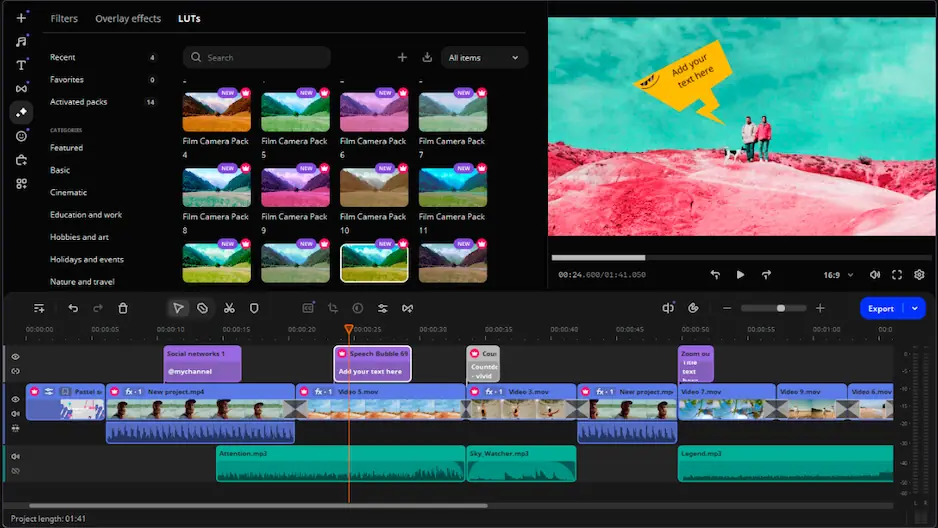
Alternative: Movavi Video Editor

Looking for a simpler alternative? If DaVinci Resolve's complexity is causing more friction than it's worth – especially for straightforward editing projects – Movavi Video Editor is a user-friendly option worth trying. It handles common formats like MP4 and PNG sequences without codec headaches, keeps its project files and media management simple to avoid offline-media surprises, and offers an intuitive interface that gets you from footage to finished video faster. It's a solid choice for content creators who want reliable results without navigating a professional broadcast suite.

Join us for discounts, editing tips, and content ideas

1.5M+ users already subscribed to our newsletter

By signing up, I agree to receive marketing emails from Movavi and agree to Movavi's Privacy Policy.