
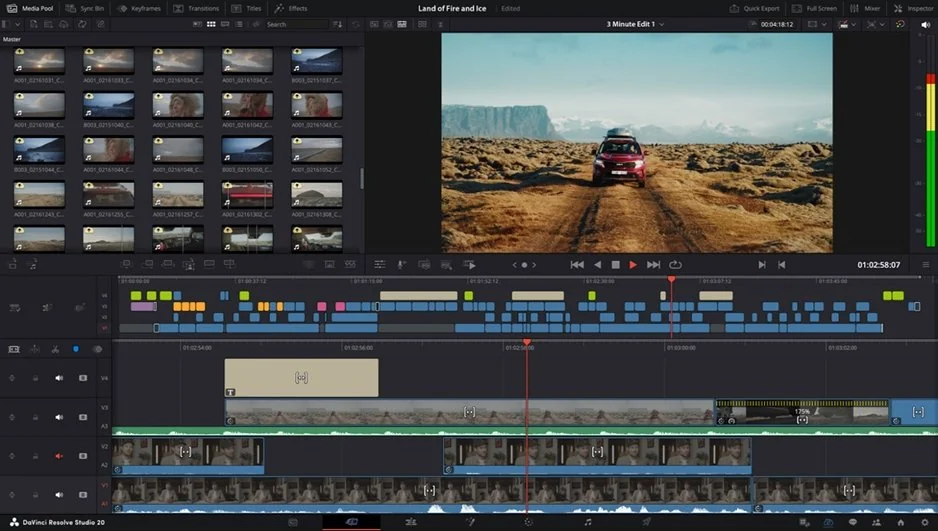
DaVinci Resolve Crashing – Fixes to Stop It

Edited by
Ben Jacklin
5,393

If DaVinci Resolve keeps crashing every time you sit down to edit, you're not alone. The good news is that most causes are fixable. Crashes usually trace back to outdated graphics drivers, insufficient memory, corrupted preferences, or unsupported media formats. In this guide, you'll learn the most common reasons behind these interruptions and walk through practical, step-by-step fixes to get your projects running smoothly again. By the end, you'll know how to diagnose the problem quickly and prevent future DaVinci Resolve crashing issues for a stable editing workflow.

Matching crashes to their cause

Before applying any fix, it helps to pin down when the crash happens. So, why does DaVinci Resolve keep crashing? DaVinci Resolve is a large program with many moving parts, and the moment it fails often points straight to the culprit. Pay attention to what you were doing in the seconds before the screen froze or the software closed, because that single detail can save you hours of guesswork.

If DaVinci Resolve is crashing on startup, before you even reach a project, the problem usually lies with your GPU drivers, a broken installation, or corrupted preference files. A program that never fully loads is telling you something is wrong at the foundation, not with your edit.

Crashes during playback or scrubbing the timeline tend to point at media and hardware. Unsupported codecs, heavy 4K footage, or an overloaded graphics card can each cause DaVinci Resolve to stutter and quit. If you notice DaVinci Resolve not responding the instant you hit play on a specific clip, that clip's format is a prime suspect.

When failures strike during rendering or export, the pressure is falling on memory and processing power. Long timelines, complex effects, and high output settings demand resources your system may not have free, especially if other applications are running in the background.

Crashes tied to a particular tool suggest that feature is leaning hard on your GPU. Noticing the pattern narrows your search dramatically.

Fast fixes without reinstalling

Start with the simplest reset of all: close the program completely and restart your computer. This clears temporary memory conflicts and background processes that quietly pile up during long sessions. If DaVinci Resolve keeps freezing even after a clean restart, move on to resetting your preferences, which flushes out corrupted settings without touching your actual project files.

Next, update your graphics drivers directly from NVIDIA, AMD, or Intel rather than relying on the version your operating system installed automatically. Outdated or generic drivers are one of the most frequent triggers for instability, and a fresh installation often resolves stutters and sudden shutdowns on the spot.

Free up system resources by closing web browsers, chat apps, and anything else competing for memory in the background. You can also clear the render cache from within the program and generate optimized media for demanding footage, which lightens the load on both your processor and graphics card.

Finally, if a single tool or effect is the offender, disable it temporarily or lower your timeline playback resolution.

Configuring your GPU and graphics card

Beyond keeping drivers current, DaVinci Resolve gives you direct control over how it talks to your graphics card. The wrong configuration here is a common source of instability. You'll find these controls under Preferences, in the Memory and GPU tab, where the software lets you choose the processing mode and which cards it draws on.

The most important setting is the GPU processing mode: CUDA for NVIDIA cards, Metal on Mac, or OpenCL as a broader fallback. Resolve usually auto-detects the best option, but forcing the mode that matches your hardware can eliminate errors caused by a poor automatic guess. If your machine has both integrated and dedicated graphics, make sure the program is assigned to the powerful discrete card rather than the weaker built-in chip.

If DaVinci Resolve crashes during render, this often traces back to the GPU running out of dedicated memory. Lowering the number of frames processed simultaneously, or capping how much video memory Resolve is allowed to consume, gives the card breathing room and prevents it from tipping over mid-export.

On systems with multiple graphics cards, try disabling all but one. Splitting work across mismatched GPUs sometimes confuses the software, and consolidating onto a single reliable card can restore stability instantly.

Reinstalling safely without losing projects

If none of the earlier steps restore stability, a clean reinstall is your safety net – but first, protect your work. Your projects, media, and preferences live separately from the application itself, so removing the software doesn't have to mean losing anything. Before you begin, open the Project Manager, right-click each project, and export it as a .drp file to a safe folder outside the program's directory. This gives you a backup you can import again in seconds.

When you uninstall, choose the option to keep your database and user settings if your system offers it. On Windows and Mac computers, the project database is stored in a dedicated location that the uninstaller generally leaves untouched, but confirming this beforehand spares you an unpleasant surprise. Note down any custom keyboard shortcuts or panel layouts as well, since those are quicker to recreate from a reference than to reconstruct from memory.

Once the old version is gone, download the latest release directly from the Blackmagic Design website and install it fresh. Reopen the Project Manager, import your saved files, and your timelines return exactly as you left them.

Getting help from Blackmagic support

If crashes persist after every fix above, it's time to reach out for expert help. Blackmagic Design offers a dedicated support portal and an active user forum where both staff and experienced editors respond to technical problems. When you post, include your operating system, Resolve version, graphics card, and the exact steps that trigger the crash along with any log files. The more precise your details, the faster someone can pinpoint the issue and guide you toward a solution the general troubleshooting couldn't reach.

Alternative: Movavi Video Editor
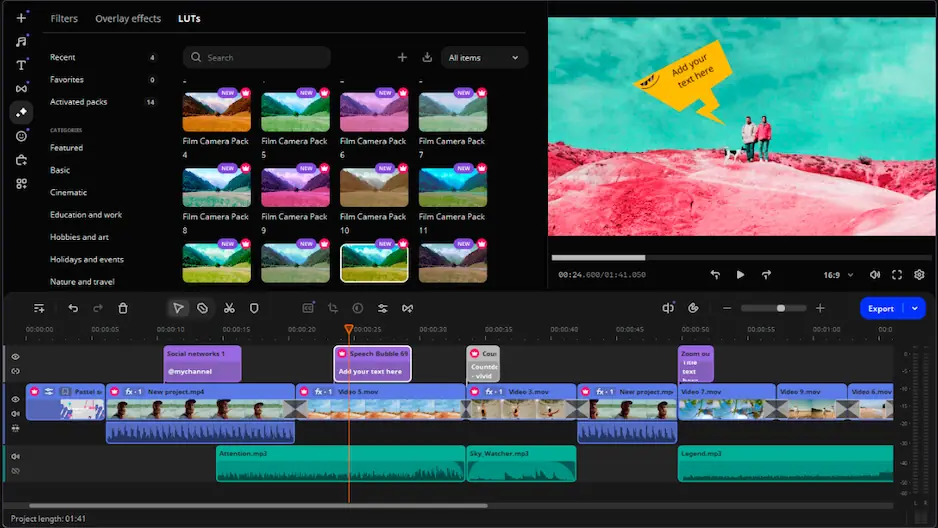
If DaVinci Resolve's demands on your hardware keep getting in the way of finishing projects, it may be worth trying a lighter tool alongside it. Movavi Video Editor is a strong option for anyone who wants to edit without wrestling with heavy system requirements. It runs comfortably on modest laptops, handles common formats out of the box, and offers a clean, drag-and-drop interface that beginners pick up in minutes rather than weeks.

Resolve is a powerful professional suite, but its learning curve can feel like an entire DaVinci Resolve crash course before you produce your first clip. Movavi Video Editor provides speed and simplicity, making it ideal for quick edits, social media content, or times when stability matters more than cinematic control.

Have questions?
If you can’t find the answer to your question, please feel free to contact our Support Team.
Join us for discounts, editing tips, and content ideas

1.5M+ users already subscribed to our newsletter

By signing up, I agree to receive marketing emails from Movavi and agree to Movavi's Privacy Policy.