

Clipchamp Keeps Crashing – Quick & Easy Fixes

Edited by
Ben Jacklin
5,399

If Clipchamp keeps crashing every time you try to edit or export a video, you're not alone. This is one of the most common frustrations users face with Microsoft's built-in editor. The good news is that most crashes stem from fixable causes like outdated software, a full cache, browser conflicts, or hardware limitations. In this guide, you'll learn why Clipchamp is not working and walk through simple, proven fixes to get you back to smooth, uninterrupted editing in minutes.

Common reasons behind Clipchamp crashing

Before jumping into solutions, it helps to understand what triggers the problem in the first place. Clipchamp crashing is rarely random. It usually points to a specific conflict between the app and your system, browser, or project files. Knowing the root cause makes the right fix far easier to find.

One of the common causes is an overloaded browser cache. Because the web version runs inside your browser, months of stored temporary files can bog it down until the app freezes or shuts down mid-task. A cluttered cache leaves little breathing room for the memory-heavy work of video editing.

Hardware limits are another frequent trigger. Editing, and especially exporting in 1080p or 4K, demands significant RAM and processing power. On older machines or laptops with limited memory, Clipchamp crashing often happens the moment you add too many layers, effects, or high-resolution clips to a single timeline.

Outdated software plays a role too. Running an old version of the desktop app, an unpatched browser, or outdated graphics drivers can create compatibility gaps that destabilize the program. These small mismatches quietly build up until the app can no longer keep pace.

Finally, corrupted project files, unstable internet connections, and interference from browser extensions or antivirus tools round out the usual suspects.

Fast fixes to try first

When the app suddenly stops responding, start with the quick wins before attempting anything technical. These take only a few minutes each and resolve the majority of cases where Microsoft Clipchamp not opening turns into a recurring headache. Work through them in order and test the app after each one.

Begin by clearing your browser cache and stored data. Head into your browser settings, find the privacy or history section, and delete cached files and cookies. This frees up memory and wipes out the corrupted temporary data that so often leaves the editor stuck on a loading screen or refusing to launch at all.

Next, update your graphics drivers. Outdated or buggy drivers are a leading reason behind Clipchamp not opening, since the app leans heavily on your GPU to render previews and exports.  Open Device Manager, locate your display adapter, and select Update driver or grab the latest version straight from NVIDIA, AMD, or Intel.

Then check your GPU acceleration settings. If hardware acceleration is enabled but your graphics card is struggling, toggle it off in your browser or app settings. Conversely, if it's disabled, switching it on can lighten the load on your processor and smooth out performance.

Restart both the app and your device. A simple reboot clears lingering background processes and memory leaks, often restoring normal function without any deeper troubleshooting.

Fixing crashes when you import media

Import-related crashes usually trace back to the file itself rather than the software. Large 4K clips, unusual codecs, or footage pulled from a phone can overwhelm the editor the instant you drop them in. Convert oversized or exotic files to a friendly format like MP4 (H.264) using a free tool such as HandBrake, then try importing again. Trimming a huge clip into smaller pieces beforehand also eases the strain that sometimes escalates into microsoft clipchamp not opening after a failed load.

Your GPU and cache play a part here too. Because importing triggers thumbnail generation and preview rendering, a strained graphics card or a bloated cache can stall the process and leave Clipchamp stuck buffering on a spinning icon that never finishes. Refreshing your cache and confirming your graphics drivers removes two of the most common issues tied to lags after an import attempt. 

If a single file consistently causes the freeze, isolate it. Import your clips one at a time to spot the troublemaker, then re-export or replace that specific file.

Fixing crashes while saving or exporting

If the app freezes or throws an error partway through rendering, start by lowering your export settings – drop from 4K to 1080p or reduce the frame rate. Closing every other browser tab and background program frees up the memory that a smooth export depends on, and it often resolves cases if Microsoft Clipchamp is not loading.

Storage and stability matter just as much. A nearly full drive gives the editor nowhere to write the finished file, so clear several gigabytes of space before you try again. A shaky internet connection can interrupt the render too, since the app relies on the cloud to save your work. It also might be one of the quiet reasons why Clipchamp projects are not loading when you reopen them later.

If the crash persists, export in smaller segments and stitch them together afterward, or sign out and back into your Microsoft account to refresh the session.

Still crashing? Advanced steps to try

If you've worked through every fix above and Microsoft Clipchamp keeps crashing anyway, it's time for a fresh start. Completely reinstall the desktop app, or switch from the app to the web version (or vice versa) to rule out a broken installation. Trying a different browser can also expose whether the problem lives in your setup rather than the editor itself.

When nothing on your end works, the issue may be Microsoft's to solve. Check the service status page for known outages, then report your crash through the app's Help menu so the team can investigate. If deadlines are looming, a lightweight alternative can keep your project moving while you wait.

A reliable alternative: Movavi Video Editor
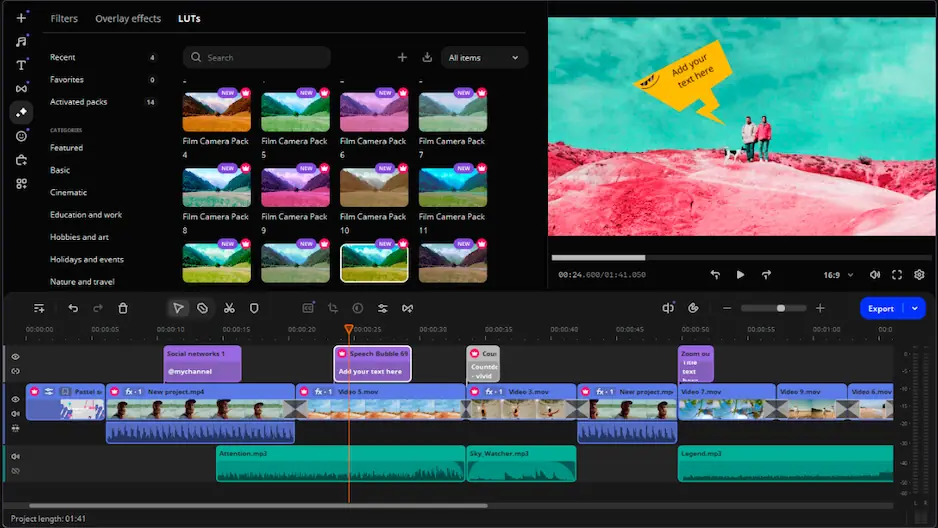
If the crashes simply won't quit and you need a dependable tool to finish your project, Movavi Video Editor is worth a serious look. Unlike browser-based editors, Movavi runs as a full desktop application, so it doesn't rely on cache, tabs, or a steady internet connection to keep working. That alone sidesteps many of the triggers we've covered throughout this guide, giving you a smoother, more stable editing experience.

Movavi Video Editor is built with beginners in mind. Its clean drag-and-drop timeline, built-in effects, titles, and transitions make it easy to pick up, while support for a wide range of formats means fewer headaches when importing footage. It handles exports gracefully even on modest hardware, and a free trial lets you test it before committing.

Have questions?
If you can’t find the answer to your question, please feel free to contact our Support Team.
Join us for discounts, editing tips, and content ideas

1.5M+ users already subscribed to our newsletter

By signing up, I agree to receive marketing emails from Movavi and agree to Movavi's Privacy Policy.