
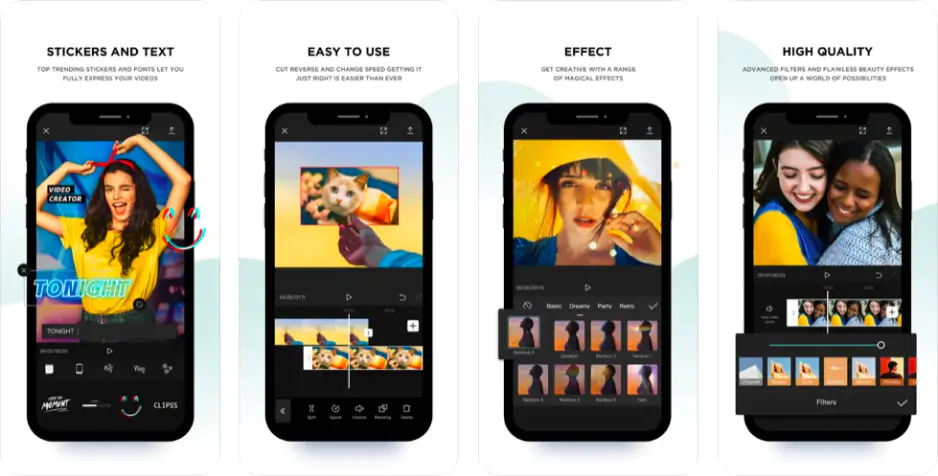
CapCut Export Not Working? Here's How to Fix It

Edited by
Ben Jacklin
35,355

You spent an hour on the edit, hit the button, and nothing happens – or the bar freezes, or you get a cryptic code. When CapCut won't export, it's almost never your project that's broken. In most cases the timeline is safe and the app simply can't finish writing the final file. The trigger is usually one of a handful of things: a clogged cache, low storage, an outdated app version, one bad clip, or a resolution setting your device can't handle.

This guide walks through the most common reasons CapCut export is not working and gives you a clear fix for each – whether the export is stuck, fails with an error, or comes out with no sound. At the end, if you're tired of babysitting exports, there's a more predictable option worth a look. 

CapCut stuck at 100% – what to do

 An export that freezes is the single most reported problem. It might stall at 1%, hang at 30%, or crawl all the way to 100% and then sit there without saving. The percentage where it stops is a hint, not a diagnosis – the underlying causes are the same, so work through them in order from easiest to hardest.

Restart first. Close CapCut completely (swipe it out of recent apps, don't just minimize it), restart your phone or computer, then reopen the project and try again. A surprising share of "export stuck" cases are a one-off glitch that a clean restart clears.

Clear the cache. A bloated or corrupted cache is one of the biggest reasons an export stalls or throws the dreaded error 10007. Inside the app, open Settings and tap Clear Cache. On Android you can also go to phone Settings > Apps > CapCut > Storage > Clear cache. On the desktop app, save and close your project, open Settings, find Cache size, and delete it. On iPhone there's no in-app cache clear, so offloading and reinstalling the app is the equivalent step.

Free up storage. CapCut needs room to write the finished file. If your device is nearly full, the export will hang near the end. Delete old downloads and unused apps, and aim to keep at least 2–3 GB free for larger projects.

Close background apps. Other apps competing for memory can choke a long render. Shut everything else down before you export. On the desktop app specifically, if exports keep stalling, try turning off hardware acceleration: Settings > Performance > uncheck "Speed up hardware encoding," then save and re-export.

Lower the settings. A heavy 4K, 60fps project can take a long time and sometimes gets stuck mid-render. Drop the resolution to 1080p and the frame rate to 30fps and try again – for social media that's plenty, and it often gets a frozen export moving.

Isolate a bad clip. If it still won't export your video, one imported file may be corrupted. Export the project in shorter chunks to find the clip that breaks it, then replace or re-encode that file before importing it back in.

Format error during export

Sometimes the export doesn't hang – it fails outright with a message about the format, a codec, or an error code. This is CapCut telling you it can't process or write the file with the current settings or source media.

Start with the settings themselves. If the app throws an error the moment you pick a resolution, your device may not support that output. On mobile, only newer iPhones and high-end Android models reliably offer 4K; many mid-range phones cap out at 1080p. If 4K is greyed out or causes an "export failed" message, step down to 1080p. For most viewers watching on a phone, 1080p and 4K look nearly identical anyway, so you lose almost nothing.

It's worth knowing the CapCut export quality free vs pro split here, because it causes a lot of confusion. The free version handles standard exports cleanly and, contrary to popular belief, does not stamp a watermark on ordinary edits – only clips built with Pro-labelled templates, effects, or premium music add one. What free generally can't do is unlock 4K, HDR, and HEVC output; those top-tier CapCut video export quality settings live behind Pro. So if you're chasing higher-than-1080p quality and hitting walls, that limit is by design, not a bug.

For the codec itself, H.264 is the universal, safe choice and plays everywhere. HEVC (H.265) gives you a smaller file at the same quality but isn't supported on every device or platform, so if a format error appears after you switch to HEVC, go back to H.264.

Finally, the housekeeping fixes still apply to format errors: update CapCut to the latest version (outdated builds are a frequent cause of export failures), and if the install itself is corrupted, uninstall and reinstall from the official store rather than any third-party APK. If your video looks bad or blurry rather than failing, the culprit is almost always a low resolution or low bitrate – export at 1080p or higher with the bitrate set to High. 

Exporting without sound

A silent export is its own special frustration: the video renders fine, but the audio is gone. Before assuming CapCut is broken, check the timeline.

The most common cause is a muted or hidden track. Scan every audio and video layer for a crossed-out speaker icon and make sure the volume on each clip isn't dragged to zero. If you recorded a voiceover, confirm the voiceover track is actually enabled and audible in the preview.

A second cause is a replaced clip. When you swap a clip for one of a different length – common with templates – the audio can slip out of sync or drop entirely. Re-check timing on the timeline and reattach any audio that came unlinked.

Also make sure your source clip actually contains audio and that its format is supported; a clip recorded with an unusual codec can import as video-only. If the preview has sound but the export doesn't, run the standard triage: clear the cache, update the app, and re-export. As a last resort, add the audio as a separate imported track rather than relying on the clip's embedded sound.

When you just want the export to work: Movavi Video Editor

If you've clawed your way through cache clears, reinstalls, and resolution downgrades and you're still fighting the export screen, the honest takeaway is that CapCut's rendering can be temperamental – especially with heavier projects, mobile-to-desktop syncing, and higher resolutions locked behind Pro. Sometimes the fix isn't another workaround; it's an editor that exports reliably the first time.

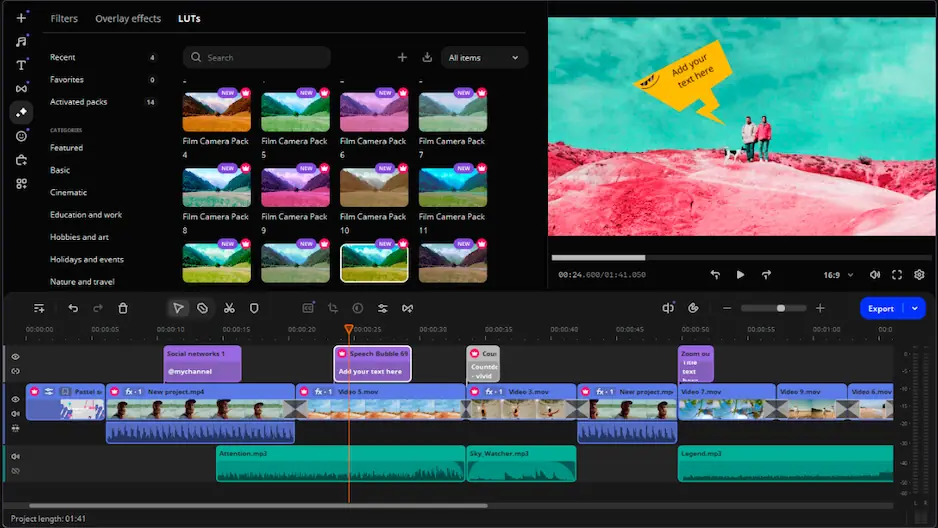
Movavi Video Editor is an easy one to recommend for exactly that. It runs on both Windows and Mac, so you're not tied to one ecosystem, and it pairs a clean, beginner-friendly interface with a deeper toolkit than CapCut's free tier – layered timelines, keyframe animation, motion tracking, a large library of transitions and effects, and AI-assisted extras like auto-captioning and background removal. Crucially for anyone reading this, its export is straightforward: pick your format and resolution, and it renders locally without the connection dependencies and template quirks that trip CapCut up.

The pricing is flexible too. Movavi offers subscription plans as well as a one-time lifetime license, so you can avoid recurring fees if you prefer. Figures shift with region and promotions, so check the official store before buying. You can also try it risk-free with a 7-day free trial that opens the full editor – just note that trial exports carry a watermark and a 60-second length cap, and the trial can auto-renew, so set a reminder to cancel if you're only testing.

Most CapCut export problems come down to five things: cache, storage, an outdated app, one bad clip, or a resolution your device can't handle. Work through those in order and the large majority of stuck exports, error codes, and silent renders resolve without losing your project. But if reliable, no-drama exporting matters more to you than staying inside CapCut – and if you want cross-platform support and room to grow – a dedicated editor like Movavi is built to get your video out the door on the first try.
Have questions?
If you can’t find the answer to your question, please feel free to contact our Support Team.
Join us for discounts, editing tips, and content ideas

1.5M+ users already subscribed to our newsletter

By signing up, I agree to receive marketing emails from Movavi and agree to Movavi's Privacy Policy.