
Canva Desktop App: Can You Use Canva Offline

Edited by
Ben Jacklin
4,611

Whether you're a freelancer working from a café with spotty Wi-Fi, a student finishing a project on a long-haul flight, or a professional who simply needs to keep creating when the Internet drops – you've probably asked yourself: can you use Canva offline? The answer is nuanced, and understanding it can save you a lot of frustration.

This guide breaks down everything you need to know about the Canva desktop app, its offline capabilities, and what to do when you genuinely need an Internet-free design workflow.

What is the Canva desktop app

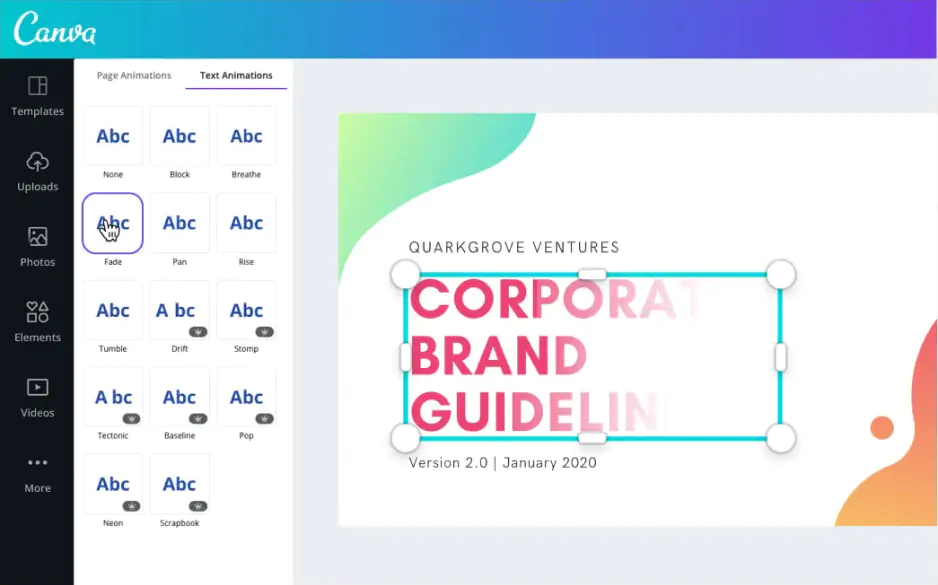
Canva desktop app is a downloadable version of Canva's popular browser-based design platform. Available for both Windows and macOS, it brings Canva out of the browser tab and into a dedicated application on your computer. You can download Canva desktop app on their official website.

The process is straightforward: head to Canva.com/desktop, choose your operating system, and follow the installation steps. The Canva desktop app download for Windows works on Windows 10 and above, while the Canva desktop app for Mac supports macOS 10.13 and later.

So how does the Canva desktop app actually differ from using it in your browser? In terms of design features, very little – the interface is nearly identical. The key advantages of Canva desktop vs. browser come down to convenience: a persistent app icon, faster launch times, reduced risk of accidentally closing a tab, and slightly better performance on lower-powered machines. But here's the thing that surprises most users: the Canva desktop app is still fundamentally a cloud-based tool. It requires an Internet connection for almost everything.

Offline mode in Canva

This is the question everyone wants answered: is Canva offline capable? Let's be direct.

Canva does not have a full offline mode. Whether you're using the desktop app or the browser version, the vast majority of features require an active Internet connection. If you're wondering why is my Canva offline, the answer is almost always that your Internet has dropped – not that Canva has switched into a special offline state.

That said, the Canva offline mode desktop app does offer a very limited form of offline access. If you were recently working on a design and still have the app open, you may be able to continue viewing and making minor edits to that design while temporarily disconnected. Canva caches some recent work locally, which means Canva offline use is technically possible in a very restricted sense – but don't count on it for any serious session.

Here's a breakdown of what works and what doesn't when you try to use Canva offline:

What you might be able to do:

  • View a design you already had open before losing connectivity
  • Make very basic text edits on a cached design (results may not save properly)
  • Browse a small number of recently accessed templates that were loaded before going offline

What you cannot do when attempting Canva offline editing:

  • Access your full design library
  • Search or load new templates, elements, or stock photos
  • Upload new images or assets
  • Export or download your finished design
  • Access brand kits, shared team projects, or any cloud-stored assets
  • Use AI-powered features like Magic Write or Background Remover

So while you technically might be able to work on Canva offline in a pinch, you cannot reliably edit Canva offline or work on Canva offline for any meaningful project. The platform was built from the ground up as a web-first tool, and Canva offline mode is more of an accidental side effect of caching than a designed feature.

The same answer applies to Canva desktop app features – even the dedicated desktop experience doesn't change the fundamental cloud dependency. Whether you ask how to use Canva offline, can you work on Canva offline, or can you edit Canva offline, the practical answer remains: not meaningfully.

How to save your work when the connection is lost

Even if Canva offline capability is limited, there are steps you can take to protect your work and minimize disruption when your connection drops unexpectedly.

1. Download your designs regularly. The most reliable way to safeguard your work is to export a copy to your local machine often. Go to Share, Download and save a PDF or PNG version of your current progress. This won't let you continue editing offline, but it preserves what you've done so far.

2. Use Canva's autosave as a safety net – but don't rely on it alone. Canva autosaves your work to the cloud while you're connected. If your connection drops mid-session, anything saved before the outage will be there when you reconnect. However, edits made during the outage may be lost.

3. Keep the desktop app open rather than closing it. If you suspect you're about to lose connectivity (you're boarding a plane, heading into a tunnel, or your Wi-Fi is unstable), keep the Canva desktop app open on your current design. The cached state is more likely to persist if the app stays running.

4. Save a Canva file as a template before going offline. You can't truly export a Canva-native editable file for local use the way you would with a .psd or .ai file, but saving your design to Your Projects before going offline at least keeps it accessible the moment connectivity returns.

5. Consider switching tools for offline-heavy workflows. If your work regularly takes you into situations without reliable Internet, the honest solution is to use software designed for Canva offline work – or rather, software with genuine offline support.

Video editors with full offline mode

For users whose design work includes video – and who need to use Canva without Internet or work in environments where Internet access is unreliable – the gap becomes even more significant. Canva's video editor, like the rest of the platform, requires a connection to function. If you're asking can you use Canva without the Internet for video projects, the answer is a firm no.

This is where desktop video editors with true offline modes come in. Unlike Canva, these tools store everything locally: your project files, your assets, your exports. You can work on a remote location, a plane, or anywhere without Wi-Fi, and your work is always right there on your machine.

Some well-known options in this space include DaVinci Resolve (free, powerful, fully offline), Adobe® Premiere® Pro (subscription, industry standard), and Final Cut Pro (Mac only, one-time purchase). These are professional-grade tools, however, and can feel overwhelming if you're coming from Canva's simplified interface.

For users who want something closer to Canva's simplicity but with genuine offline support, Movavi Video Editor is worth a close look.

Alternative: Movavi Video Editor
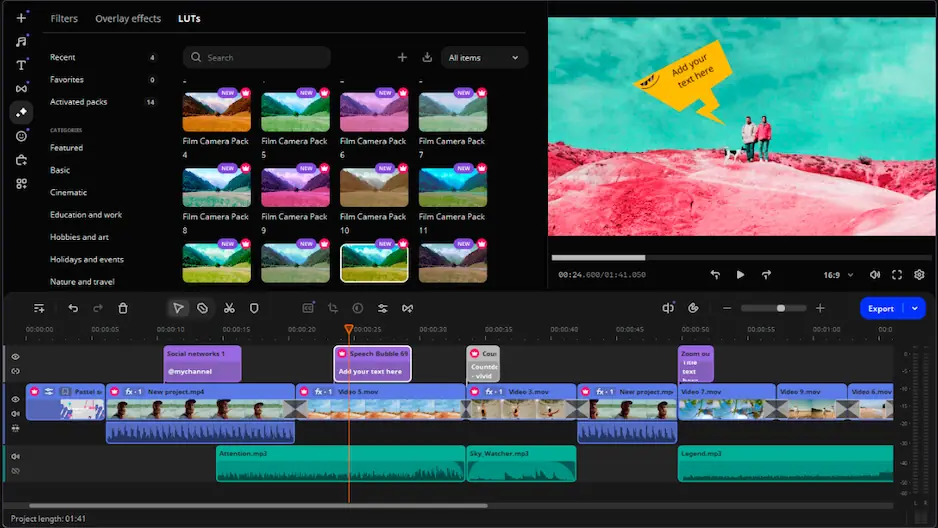
Movavi Video Editor is a desktop-first video editing and content creation tool available for both Windows and macOS. Unlike Canva, it is installed locally on your machine and works entirely offline – no Internet connection required once it's set up.

Here's why Movavi makes sense as an alternative for users frustrated by Canva's offline limitations:

Full offline functionality. Every feature in Movavi works without an Internet connection. You can import footage, add titles and transitions, apply filters and effects, and export your finished video – all without needing Wi-Fi. For anyone who has asked can I use Canva without the Internet and hit a wall, this is the core appeal.

Beginner-friendly interface. Movavi was designed with simplicity in mind. The drag-and-drop timeline, pre-built intro templates, and one-click effects make it accessible to users who aren't professional video editors – which maps well to the kind of user Canva attracts.

A built-in asset library. Movavi includes a library of royalty-free music, sound effects, transitions, and video clips that are stored locally after download. This means you're not dependent on a cloud connection to find and use creative assets.

One-time purchase or subscription. Movavi is available as both an annual subscription and a one-time license, which can be more economical than Canva Pro for users who mainly need video capabilities.

Of course, Movavi is focused on video rather than the full range of graphic design work Canva covers (social media graphics, presentations, print materials). It's not a one-to-one replacement – but if video content is central to your workflow and offline access is non-negotiable, Movavi fills the gap Canva leaves open.
Have questions?
If you can’t find the answer to your question, please feel free to contact our Support Team.
Join us for discounts, editing tips, and content ideas

1.5M+ users already subscribed to our newsletter

By signing up, I agree to receive marketing emails from Movavi and agree to Movavi's Privacy Policy.