
OpenShot vs. Shotcut: Features, Pricing, Performance Compared

Edited by
Ben Jacklin
5,832

OpenShot and Shotcut are both free, open-source video editors that run on Windows, Mac, and Linux. OpenShot suits beginners with its simple drag-and-drop layout, while Shotcut offers deeper features and broader format support at the cost of a steeper learning curve, making it the stronger pick for more demanding projects.

Comparison parameter

OpenShot

Shotcut

Who it's for

Beginners, hobbyists, casual creators

Intermediate editors, enthusiasts, budget-conscious creators

Supported platforms

Windows, macOS, Linux

Windows, macOS, Linux

Ease of use

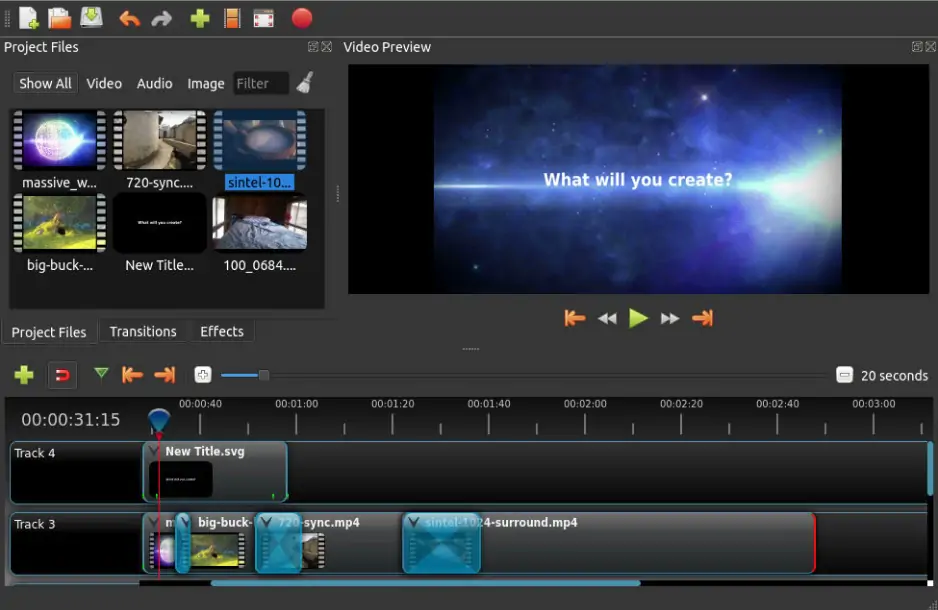
Simple drag-and-drop interface

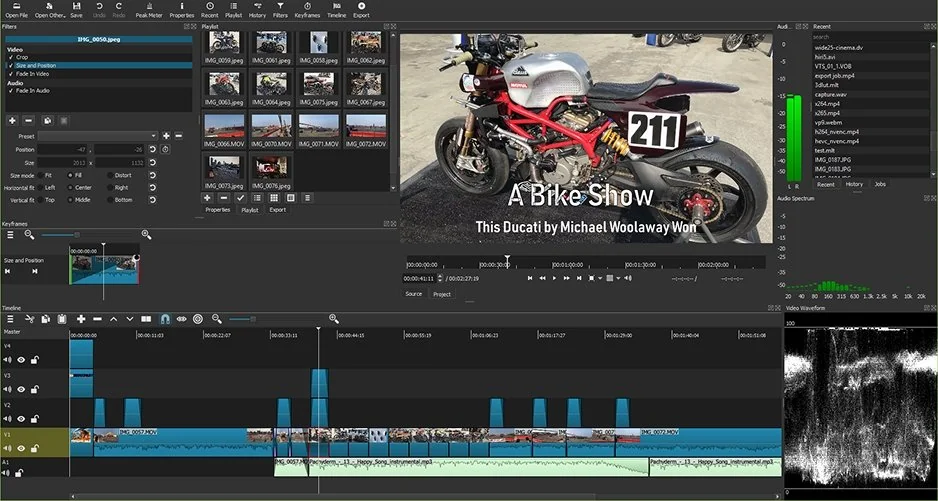
Flexible but busier interface

Quick summary

Best for professional workflows: Shotcut handles layered timelines and mixed formats more comfortably, while OpenShot starts to feel limited once projects grow beyond straightforward edits.

Best for color grading: Shotcut offers more control through filters like curves, white balance, and hue adjustments. OpenShot covers only basic brightness and color tweaks.

Best for advanced editing: Shotcut supports keyframing, video filters, and finer timeline control, giving it more room to grow than OpenShot's simpler structure.

Best overall performance: OpenShot runs lightly on modest hardware for small edits, but Shotcut stays steadier with larger, higher-resolution projects.

Ease of use

OpenShot

Shotcut

OpenShot leans hard into simplicity. The interface keeps everything visible in one window, with a media panel on the left, a preview on the right, and the timeline below, so new users rarely feel lost during the first session. Dragging a clip onto the timeline, trimming it, and dropping in a transition all happen without hunting through menus. That directness is the main reason OpenShot vs. Shotcut discussions so often frame OpenShot as the friendlier starting point.

Shotcut asks for a bit more patience up front. Panels are dockable and can be rearranged, but the default view feels busier, and useful tools like filters and export settings sit behind separate tabs that take time to learn. Once the layout clicks, though, the workflow becomes flexible in ways OpenShot cannot match, since each panel can be shaped around a specific editing task.

Winner: OpenShot. For first-time editors and quick projects, its cleaner layout and gentler onboarding make the editing process easier to follow.

Features

The Shotcut vs. OpenShot feature gap becomes clear the moment projects move past basic cuts. OpenShot centers on approachable timeline editing with unlimited tracks, drag-and-drop transitions, animated titles, and simple keyframes for position and opacity. Audio mixing stays basic, handled through volume adjustments and a handful of effects rather than a dedicated mixer, and there is no true multicam mode, so syncing several camera angles means arranging clips manually. Color work is limited to brightness, saturation, and a few correction filters, which suits casual footage but leaves little room for precise grading.

Shotcut opens more doors as demands grow. Its filter-based system layers video and audio effects with detailed keyframing, and color tools stretch to curves, white balance, and hue-lightness-saturation controls for closer matching between shots. Audio mixing benefits from per-track filters, gain staging, and metering, while motion graphics remain modest but workable through size, position, and rotation filters. Codec support is the bigger advantage. Shotcut reads and exports a wide range of formats and offers custom export settings, whereas OpenShot leans on preset profiles. Neither tool matches a full studio suite for advanced workflows, yet Shotcut clearly handles layered, higher-resolution projects with more confidence.

Winner: Shotcut, for its deeper filters, broader codec support, and greater room to scale.

Performance

OpenShot is light on system requirements and runs acceptably on modest machines, which makes it easy to install and start editing. On short, simple timelines, playback and rendering stay reasonable. The weakness shows on heavier projects: adding many tracks, effects, or high-resolution footage can slow previews and occasionally cause crashes, since GPU acceleration is limited and rendering leans mostly on the CPU.

Shotcut generally holds up better under pressure. It supports hardware-accelerated encoding for faster exports and stays more stable as timelines grow, handling 4K media and layered filters with fewer interruptions. It still benefits from stronger hardware, and preview smoothness depends on the codecs in use, but overall it remains steadier during longer, more demanding edits.

Winner: Shotcut, for faster exports and more reliable stability on large projects.

Pricing

Both Shotcut and OpenShot are completely free and open-source, with no subscriptions, license fees, or trial limits. OpenShot and Shotcut export finished videos without watermarks, and every feature is unlocked from the start. Neither locks tools behind a paid tier, so cost never shapes the decision between them.

Winner: a tie, since both are fully free without watermarks or paywalls.

Platform compatibility

Neither editor limits you to a single operating system, which sets both apart from platform-locked tools. OpenShot runs on Windows, macOS, and Linux, and it also offers portable and AppImage builds that make it easy to try without a full install. That cross-platform reach matters for users who switch between machines or work on Linux, where polished free editors are harder to find. Installation stays straightforward across all three systems, and projects open the same way regardless of the platform.

Shotcut matches that coverage with native Windows, macOS, and Linux versions, and it provides both installer and portable options too. Its builds tend to stay closely aligned across systems, so a project started on one machine behaves consistently on another. Linux support in particular is well maintained, which appeals to editors in open-source environments. For anyone moving files between mixed setups, either tool fits comfortably, and neither ties your work to one ecosystem the way some commercial editors do.

AI tools

Neither editor is built around AI. OpenShot and Shotcut both focus on manual editing, so there are no automatic captions, smart reframing, or generative features. Tasks like transcription, background removal, or scene detection require external tools, since both keep the workflow hands-on rather than automated.

Pros & cons

OpenShot

Pros:
  • Free and open-source on Windows, Mac, and Linux

  • Simple drag-and-drop interface that beginners pick up quickly

  • Unlimited tracks, transitions, and animated titles

  • No watermarks or feature paywalls

  • Lightweight installation with portable builds

Cons:
  • Can slow down or crash on large, effect-heavy projects

  • Limited color grading and audio mixing

  • No multicam or AI features

  • Fewer export options beyond common presets

Shotcut

Pros:
  • Free and open-source across all major platforms

  • Broad codec support with custom export settings

  • Filter-based effects with detailed keyframing

  • More stable on high-resolution timelines

  • Flexible, dockable interface

Cons:
  • Busier layout with a steeper learning curve

  • Interface can feel unintuitive at first

  • No built-in AI tools

  • Motion graphics remain fairly basic

Best use cases

Both editors cover everyday video needs, but the fit shifts with the type of project.

YouTube: OpenShot suits simple vlogs, tutorials, and talking-head uploads, while Shotcut handles longer videos with layered audio and tighter color work more comfortably.

TikTok & social content: both export vertical formats, though OpenShot's quick trimming feels faster for short clips and Shotcut offers cleaner finishing.

Beginner editing: OpenShot is the easier entry point, asking for less setup before the first export.

Professional editing: neither replaces a studio suite, but Shotcut stretches further for detailed, higher-quality edits.

Business & casual editing: both manage presentations, product demos, and home videos well, with OpenShot feeling lighter for casual tasks and Shotcut better for polished results.

Final verdict

The choice comes down to how far your projects go. OpenShot fits editors who want a quick, gentle path from import to export: short uploads, casual clips, and simple edits that stay uncomplicated. Shotcut rewards a little extra patience with deeper filters, broader format support, and steadier performance on larger timelines. Neither costs a thing, so the real question is whether you value simplicity or room to grow.

Alternative: Movavi Video Editor
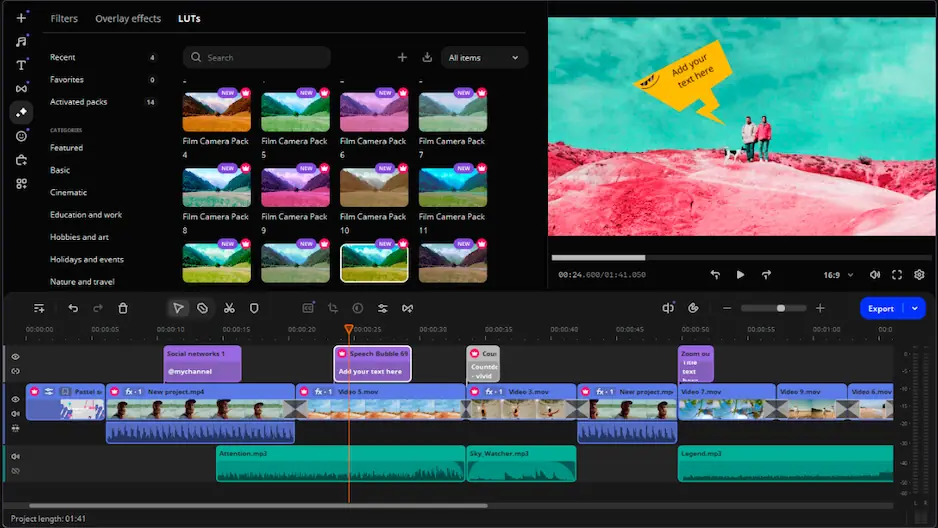
If neither OpenShot nor Shotcut feels like the right match, Movavi Video Editor sits comfortably in the middle. The interface stays clean and intuitive, drag-and-drop editing feels natural, and most tools are easy to find, so there is less friction between having an idea and finishing a video.

It also adds conveniences the two free editors leave out. Built-in AI-assisted tools, background removal, automatic subtitles, ready-made effects, transitions, and quick export presets help routine projects move faster. Movavi runs on both Windows and Mac and is paid rather than free, but for users who edit regularly and want a smoother, more guided experience without stepping up to a full professional suite, that balance can make more sense day to day.
Frequently asked questions

Is OpenShot or Shotcut better for beginners?

OpenShot is usually the easier start. Its single-window layout and drag-and-drop editing take less time to learn, while Shotcut offers more tools but asks for more patience before the workflow feels natural.

Are OpenShot and Shotcut really free?

Yes. Both are open-source and completely free, with no subscriptions, trial limits, or watermarks on exported videos. Every feature is available from the moment you install.

Can OpenShot and Shotcut handle 4K videos?

Both support 4K, but the experience differs. Shotcut stays steadier with high-resolution footage and heavier timelines, whereas OpenShot can slow down or become less stable once projects grow large or effect-heavy.

Have questions?
If you can’t find the answer to your question, please feel free to contact our Support Team.
Join us for discounts, editing tips, and content ideas

1.5M+ users already subscribed to our newsletter

By signing up, I agree to receive marketing emails from Movavi and agree to Movavi's Privacy Policy.