
CapCut vs. Premiere® Pro: Features, Pricing, Performance Compared

Edited by
Ben Jacklin
11,582

CapCut is usually the app people reach for when a half-edited video is sitting in their camera roll and needs to be posted tonight. Premiere® Pro (now officially called Premiere®) works differently. Even small projects tend to involve more setup, more manual tweaking, and more time spent staring at the timeline adjusting cuts, sound, or color that looked fine an hour ago. The CapCut vs. Premiere® Pro debate mostly comes down to tolerance for that process. One editor is built to keep things moving, while the other assumes you’re willing to slow down and keep refining.

Comparison parameter

CapCut

Adobe® Premiere®

Who it's for

Social creators, casual editors, fast short-form workflows

Professional editors, filmmakers, YouTubers, production teams

Supported platforms

Windows, macOS, iOS, Android, web

Windows, macOS, limited iPhone app

Ease of use

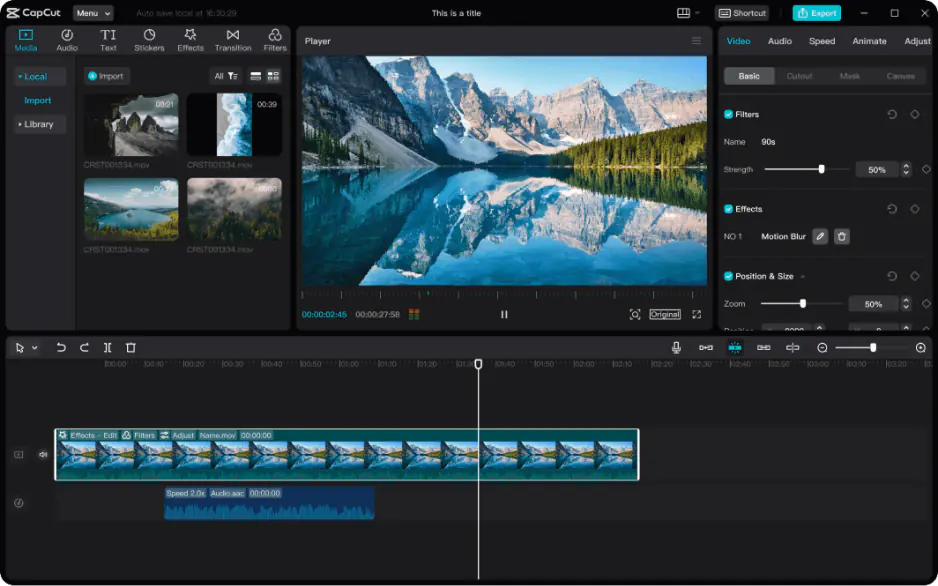
Fast, beginner-friendly, template-driven workflow

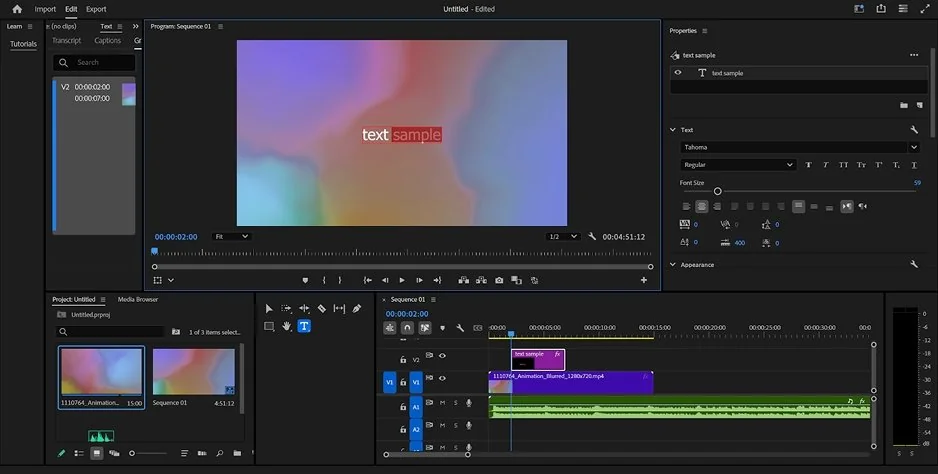
Advanced workspace with deeper manual control

Quick summary

  • Best for TikTok: CapCut moves fast. Open the app, throw captions on a clip, add a transition, export vertically, post it before the trend dies.
  • Best for beginners: CapCut hides very little. Most buttons make sense immediately, and you can get through your first edit without spending the evening watching tutorials.
  • Best mobile workflow: CapCut still feels comfortable on a phone, which honestly isn’t true for a lot of editors once timelines get longer than 30 seconds.
  • Best free option: CapCut gives away enough tools that the free version rarely feels useless after the first couple of edits.
  • Best for fine-tuning: Premiere® is slower, but you notice the payoff once projects start filling up with layered audio, color fixes, nested timelines, and endless revisions.
  • Best for collaboration: Premiere® handles shared projects more cleanly. Frame.io reviews, cloud syncing, version tracking, less confusion once multiple people start touching the same timeline.

Ease of use

Adobe® Premiere®

CapCut

CapCut is much easier to get comfortable with. Open the app and most of the things people actually use are already visible: captions, filters, templates, music, vertical exports. The editing flow moves quickly because the app is clearly built around finishing videos fast rather than carefully organizing every detail first.

Unlike CapCut, Premiere® Pro asks for more attention from the start. The interface is heavier, timelines take more management, and even smaller edits involve more manual control. That extra complexity starts paying off once projects become larger and messier: layered audio, subtitles, color work, long timelines, endless revisions. Adobe also has years of tutorials, forums, and troubleshooting threads behind it, which becomes genuinely useful the first time something breaks five minutes before export.

Winner: CapCut is easier to learn and faster to navigate, especially for short-form and mobile editing.

Features

Next let’s look at the editing tools, effects, captions, exports, and other features that shape the day-to-day workflow in both apps.

Templates & presets: CapCut leans heavily on ready-made edits, trending templates, and vertical presets for TikTok, Reels, and Shorts. Adobe® Premiere® takes a more manual approach, with fewer built-in templates but much more control over motion graphics, layered timelines, and custom workflows.

Effects & transitions: CapCut focuses on fast visual edits: beat syncing, filters, AI cutouts, and one-tap transitions designed for social content. Adobe® Premiere® offers a broader effects library, deeper color correction tools, keyframing, and more detailed audio editing.

Subtitle tools: compared to Premiere® Pro, CapCut makes captions much faster to generate and edit during shorter projects. Premiere’s® tools give you more precision over timing, formatting, subtitle tracks, and translation once projects become more text-heavy.

Export flexibility: CapCut keeps exports simple and optimized for vertical video platforms. Adobe® Premiere® supports more codecs, advanced export settings, higher-end delivery formats, and tighter output control overall.

AI-powered tools: CapCut includes auto-captions, background removal, text-to-speech, and AI avatars aimed at fast content creation. Adobe® Premiere® focuses more on editing assistance with tools like Speech Enhancement, Auto Reframe, AI masking, Firefly features, and Media Intelligence search.

Winner: CapCut is faster for everyday social edits, but Adobe® Premiere® handles larger timelines, detailed revisions, motion graphics, and audio work with far fewer limitations.

Performance

The performance difference between Premiere® Pro and CapCut becomes noticeable fairly quickly. CapCut stays light overall, especially on phones. Captions, filters, effects, and layered clips usually run smoothly, while exports for TikTok or Reels finish fast enough that the app rarely feels heavy during short edits.

Adobe® Premiere® demands much more from your hardware. High-resolution footage, layered audio, motion graphics, and color correction push CPU, RAM, and GPU usage up quickly. GPU acceleration helps, but older laptops can still slow down once timelines become larger.

The free versions also shape the experience differently. CapCut leaves many tools available before subscriptions become necessary, although some effects and AI features require Pro access. Adobe® Premiere® only offers a trial before Creative Cloud® pricing begins.

Standard CapCut exports are generally watermark-free unless premium templates or assets are used.

Winner: Adobe Premiere® handles larger professional edits more comfortably, but CapCut feels lighter, quicker, and far less demanding on everyday devices.

Pricing

CapCut keeps its pricing fairly straightforward. There’s still a free version available, while CapCut Pro pricing depends on platform and region. Monthly pricing is typically around US$9.99, while annual subscriptions start at roughly US$89.99. Standard exports are generally watermark-free unless certain premium templates or assets are involved.

Adobe® Premiere® is noticeably more expensive. Adobe currently lists the single-app subscription at US$22.99/month with annual billing, US$34.49/month for month-to-month access, and around US$21.99/month equivalent for annual prepaid plans. Students and teachers can get Creative Cloud® plans at lower prices. The subscription also includes Creative Cloud® storage, Frame.io collaboration tools, and integration with other Adobe apps like Photoshop® and After Effects®.

Winner: CapCut’s pricing is much easier to justify for most people, especially when the free version already covers everyday editing pretty well.

Platform compatibility

CapCut is available on Windows, macOS, Android, iPhone, iPad, and through a browser editor. That flexibility changes how people edit. You can start a project on a phone, reopen it later on a laptop, and keep working with very little interruption. The mobile apps also feel closer to full editors instead of simplified companion versions.

Adobe® Premiere® stays far more desktop-focused. The main app runs on Windows and macOS, while Premiere® for iPhone is still much more limited than CapCut’s mobile ecosystem. Browser editing also plays a much smaller role.

Project syncing follows the same pattern. CapCut focuses on cross-device editing, while Adobe leans more on Creative Cloud® storage, Frame.io, and integration across desktop apps.

AI tools

CapCut pushes automated features directly into the editing flow, while Adobe® Premiere® treats AI more like assistance running quietly in the background.

CapCut AI tools include auto captions, AI avatars, background removal, text-to-speech, smart cutouts, beat syncing, and beauty filters.

Most of these tools are built around speed. Open the app and they’re already sitting in front of you. Sometimes the automation works cleanly. Other times captions still need manual fixes or cutouts miss small details around hair and movement. Still, the workflow stays quick because most features only take a tap or two to apply.

Adobe® Premiere® AI tools include speech enhancement, scene edit detection, generative extend, AI masking, auto reframe, translation and caption tools, and media Intelligence search.

Adobe® Premiere® uses Adobe® Sensei and Firefly-powered tools more for editing support than visual effects. The AI is less visible overall, but more useful once projects become larger and technically messier.

Pros & cons

CapCut

Pros:
  • Simple interface

  • Works across most devices

  • Large effects and template library

  • Built-in AI tools

  • Usable free version

Cons:
  • Limited advanced editing tools

  • Some features locked behind Pro

  • Harder to manage larger projects

  • Fewer desktop controls

  • Subscription complaints from users

Adobe® Premiere® Pro
Pros:
  • Advanced editing controls

  • Professional export support

  • Strong Adobe ecosystem integration

  • Useful AI-assisted tools

  • Better for complex projects

Cons:
  • Harder to learn

  • Demands stronger hardware

  • Expensive subscription

  • Crowded interface at first

  • Limited mobile workflow

Best use cases

Some differences between these editors only become obvious once you look at the kinds of projects people actually use them for every day. 

  • TikTok, Reels, and Shorts: CapCut is clearly built around vertical content. Captions, music syncing, effects, and exports are all quick to reach, which matters when videos are being edited and posted the same day.
  • YouTube videos: Adobe® Premiere® handles longer projects more comfortably, especially once timelines start filling up with B-roll, layered audio, subtitles, graphics, and revision notes.
  • Social content: CapCut keeps everyday posting simple. Resizing clips, swapping formats, and exporting for different platforms takes very little effort.
  • Beginner editing: CapCut is easier to figure out during the first few projects. Most tools are visible immediately, and the workflow doesn’t require much setup.
  • Professional editing: Adobe® Premiere® gives editors more room to adjust audio, pacing, color, graphics, and exports in detail.
  • Business projects: Adobe® Premiere® fits collaborative workflows better through Creative Cloud, Frame.io, and tighter integration with Photoshop® and After Effects®.
  • Casual editing: CapCut makes more sense for travel clips, memes, quick family videos, and other edits that probably don’t need a full desktop editing setup.

Final verdict

What this Premiere® Pro vs. CapCut comparison makes clear is that these editors are built around very different editing rhythms. CapCut keeps almost everything close to the surface. Captions, effects, resizing, templates, exports, most actions happen quickly enough that the app rarely slows down the process of getting a video online.

Adobe® Premiere® asks for more attention from the editor. Timelines become more structured, projects require more organization, and adjustments across audio, color, graphics, subtitles, and exports start adding up quickly. That complexity can feel excessive for quick social edits, but it becomes valuable for professional editing, larger projects, detailed revisions, advanced color work, and collaborative workflows.

Alternative: Movavi Video Editor
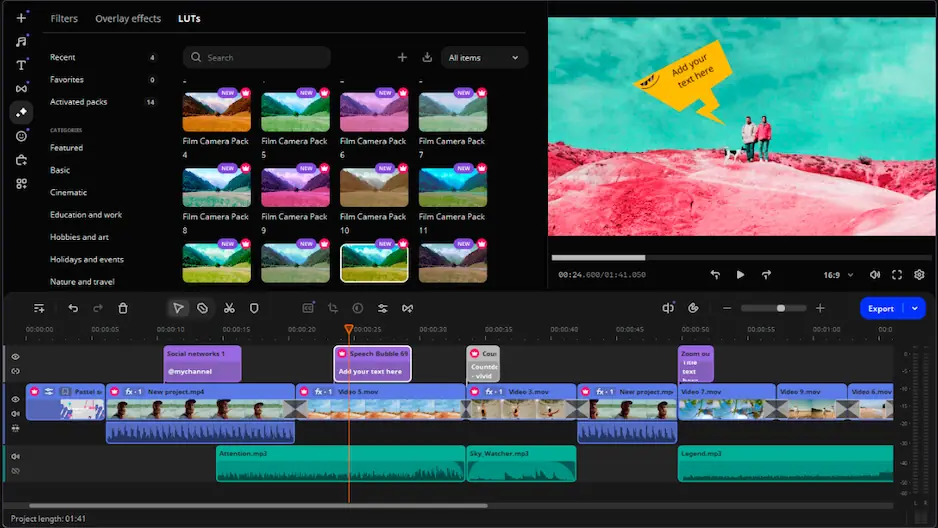
Movavi Video Editor fits into the space between CapCut and Premiere® Pro pretty naturally. CapCut can start feeling boxed in once projects get larger, while Adobe® Premiere® often comes with more setup and interface management than many people actually want for regular editing.

Movavi Video Editor gives you a desktop timeline that feels more open than CapCut’s, but it doesn’t bury simple actions under layers of panels and settings. Add subtitles, stack a few audio tracks, drop in transitions, rearrange clips, the workflow stays fairly straightforward even after projects become busier. It also includes tools like auto subtitles, background removal, and AI enhancement for improving darker or softer footage. Compared to Adobe® Premiere®, there’s less technical overhead before you can begin editing. Compared to CapCut, there’s more room to manage longer edits before the timeline starts feeling cramped.
Frequently asked questions

Is CapCut easier to use than Premiere® Pro?

Yes, by quite a bit. CapCut is built around quick editing, so most tools are visible almost immediately after opening the app. You can trim clips, add captions, apply effects, and export a video in a fairly short time. Adobe® Premiere® feels closer to traditional editing software, where projects usually involve more setup, timeline organization, and manual adjustments.

Does CapCut have a watermark?

Usually not. Most regular exports come out clean unless the project uses certain premium templates, effects, or Pro assets. The app normally warns you before exporting if something will add branding or require a paid upgrade.

Which editor is better for YouTube videos?

CapCut works better for channels uploading fast-paced content a few times a week: reactions, clips, commentary, Shorts, simple vlogs. Adobe® Premiere® becomes more useful once videos start involving separate audio tracks, motion graphics, color correction, subtitles, sponsor inserts, and multiple export versions.

Have questions?
If you can’t find the answer to your question, please feel free to contact our Support Team.
Join us for discounts, editing tips, and content ideas

1.5M+ users already subscribed to our newsletter

By signing up, I agree to receive marketing emails from Movavi and agree to Movavi's Privacy Policy.